
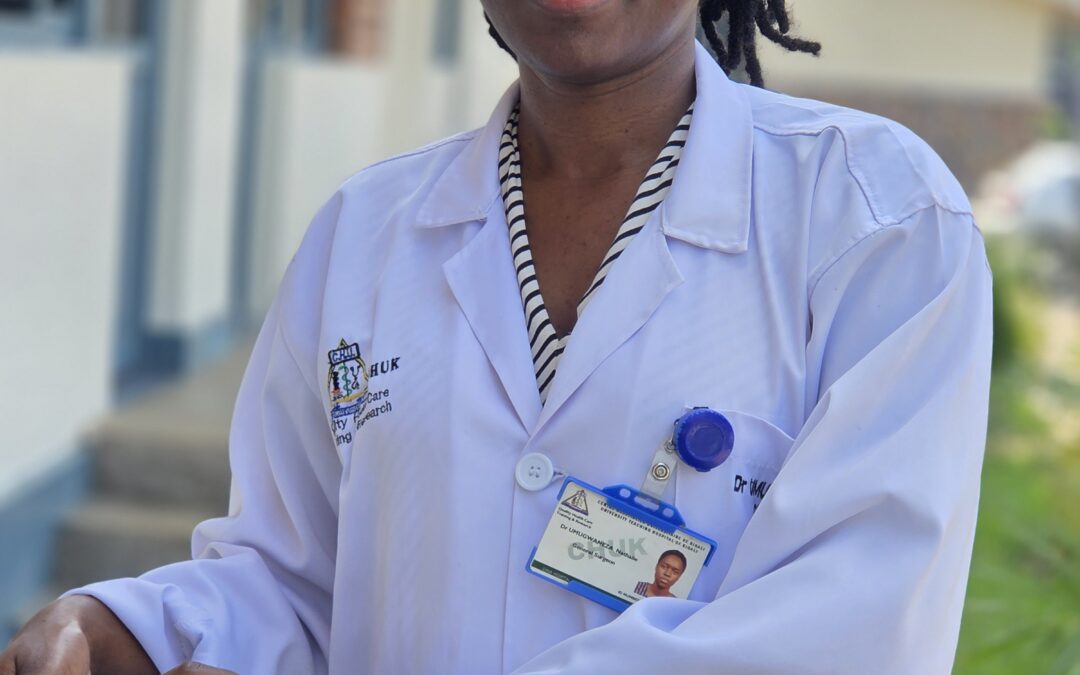
"My name is Nathalie Umugwaneza, and I am a colorectal surgery fellow at the University of Rwanda. My inspiration to join colorectal surgery began shortly after completing general surgery residency in 2022. At that time, I was practicing as a Junior Consultant general surgeon at the University Teaching Hospital of Kigali, one of the largest tertiary referral hospitals in the country, which receives complex colorectal cases from across Rwanda.
As a general surgeon, I was able to manage some colorectal conditions. However, I quickly realized my limitations when faced with diseases requiring specialized expertise, such as complex anal fistulas, rectal malignancies and those needing minimally invasive approaches. I was fortunate to work closely with Professor Daniel Zemenfes Ashebir, whose mentorship and teaching profoundly influenced my career path and inspired me to pursue formal training in colorectal surgery. When a colorectal surgery fellowship was launched at the University of Rwanda in April 2025, I eagerly joined.
Colorectal care matters deeply in Rwanda because it lies at the intersection of a growing disease burden and limited specialist resources. One particular case early in my career shaped my perspective. Shortly after completing residency, I cared for a 75-year-old man who had been seeking medical attention for six months due to abdominal pain and constipation. Two weeks before presentation, his condition deteriorated, with complete inability to pass stool and gas, increasing abdominal pain, and distension. Investigations revealed an obstructing sigmoid colon tumor, necessitating emergency surgery.
What stayed with me was not only the severity of his illness, but the fact that he had sought care months earlier. Limited access to early diagnostic services meant that intervention occurred late in the course of his disease. Many similar experiences highlight that colorectal care in Rwanda still has substantial room for growth. The absence of organized screening programs limits early detection of colorectal cancer. In addition, low public awareness, stigma surrounding anorectal symptoms, and barriers to accessing specialized care often lead to delayed presentation. Consequently, patients frequently arrive with advanced disease and treatment becomes increasingly complex.
Each patient encounter reinforces the importance of early diagnosis, multidisciplinary collaboration, and continuous surgical education. Training programs such as this fellowship are vital for building sustainable local expertise, empowering Rwandan surgeons, and creating lasting improvements in colorectal care delivery.
I strongly believe that expanding the number of trained colorectal surgeons will significantly improve access to specialized care, ultimately saving lives and enhancing the quality of life for many patients. I look forward to using the skills and knowledge I will gain to serve my community, train future generations of colorectal surgeons, and advocate for improved resources and greater awareness of colorectal conditions across the region."