This past Thanksgiving, I found myself standing in the corridors of a hospital I had rarely set foot in—and yet, somehow, it felt like I had been there all my life.
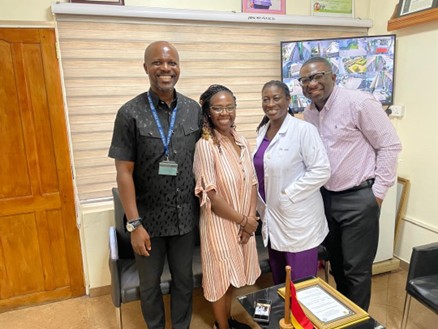
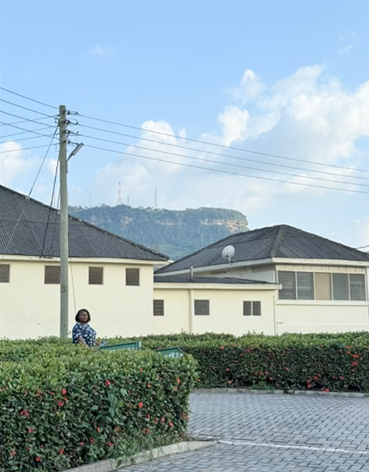
I was in Eastern Region of Ghana, at Eastern Regional Hospital, located in the bustling town of Koforidua tucked among rolling hills and red earth roads. This hospital is special for many reasons, but this year it held particular meaning for me. It is where our second graduate of Ghana’s colorectal surgery fellowship, Dr Ijeoma Aja, has established colorectal care for the region—bringing specialized surgical services to a population that, until now, had little to no access.
But the significance of this place runs deeper than our program.
This is also where my mother completed part of her nursing training, many years ago in
the 1970s—approximately 50miles from my parents’ home village, Kwahu Tafo, where they grew up, married, and began building a life together. Despite all my years working in medicine, despite returning to Ghana countless times, I had never served in these halls until now.
Standing there, I was overwhelmed by the sense of full circle.
As a child, I fell in love with medicine because of my mother. She trained as a nurse because she felt called to serve—despite limited resources, despite the realities of being a woman at a time when becoming a doctor was not common or encouraged, and
despite having dreamed of more had circumstances been different. She didn’t have the funds to pursue college, but what she lacked in formal opportunity, she more than made
up for in compassion and purpose.
She worked in public clinics and would often come home to care for people in our neighborhood—cleaning wounds, checking on the sick, offering comfort where there was none. I was her unofficial assistant. I handed her supplies. I watched. I listened. I learned. Long before I understood the word “medicine,” I understood service.
Those early experiences shaped the path I would later walk.
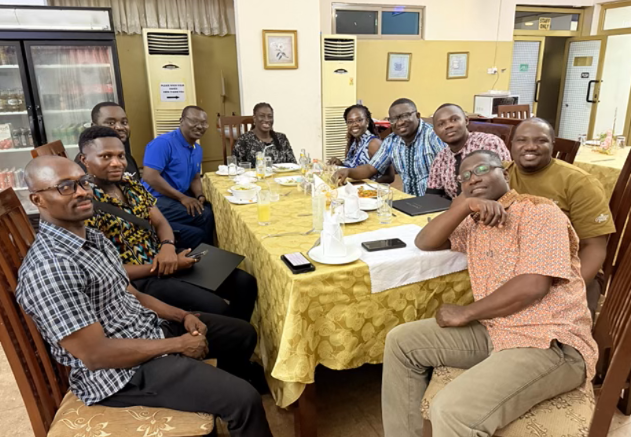
Years later, there I was—now a surgeon and educator—walking the same corridors where my mother once trained, not as a student, but as a teacher. I was there to support and train doctors and nurses. To help build systems of care. To strengthen
something sustainable. Just a few miles away from where my grandmother died—because the care she needed did not exist at the time.
That proximity was not lost on me.
This is why our work matters.
Global health is not abstract for me. It is personal. It is generational. It is rooted in memory, loss, hope, and responsibility. What we are building through this colorectal surgery training program is not just a fellowship—it is a bridge between past and future. Between what once was impossible and what can now be made possible.
This Thanksgiving, I was grateful—not just for how far we’ve come, but for the lineage that carried me here. For a mother who served without recognition. For a grandmother
whose story reminds me why access matters. And for a new generation of Ghanaian surgeons who are changing what care looks like for their communities.
Sometimes progress doesn’t look like a straight line forward.
Sometimes it looks like coming home.